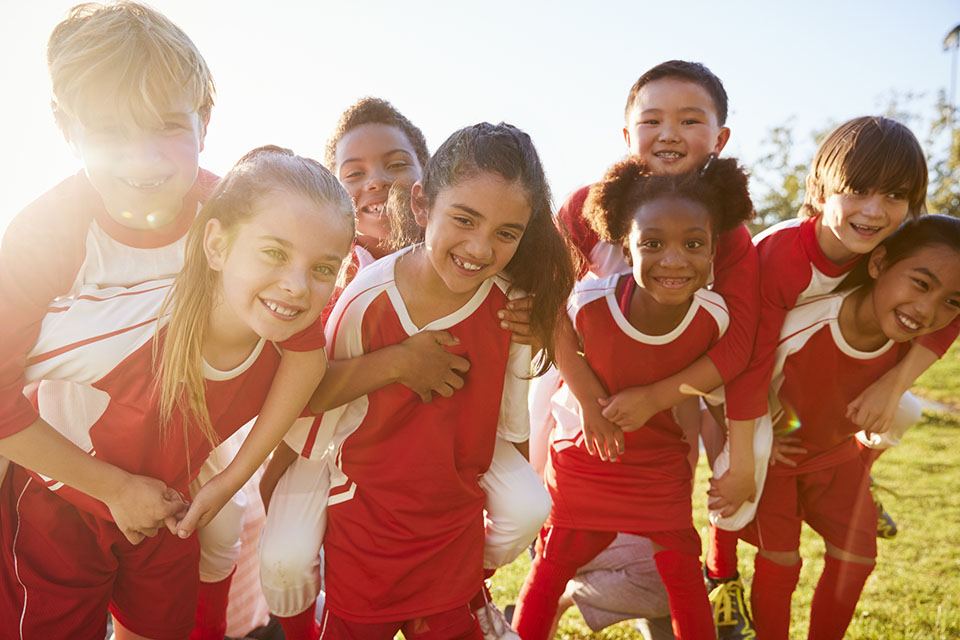
If your student-athlete recently got braces — or is about to — here’s what you need to know about keeping their smile protected on the field, court, or mat.
Yes, kids and teens in braces can play any sport they want. But not just any mouthguard will do the job.
Why a Regular Mouthguard Doesn’t Work with Braces
Standard boil-and-bite mouthguards are designed to mold tightly around the teeth, which is exactly the problem once braces are involved. A tight-fitting mouthguard can lock onto the brackets, and a hard hit can pull brackets loose or bend a wire instead of cushioning the impact. Sometimes, it can make an injury worse rather than prevent one.
What to Use Instead
Braces-friendly mouthguards are built with extra room around the front teeth to accommodate brackets and wires, so they absorb impact without gripping the hardware underneath. Dr. Taylor’s team can recommend or fit one during a regular visit — it takes just a few minutes and is one of the easiest ways to avoid an emergency appointment mid-season.
A few habits worth building in from day one of the season:
- Rinse the mouthguard before and after every use; sports bags are not a clean environment.
- Replace it as soon as it looks cracked, torn, or worn thin, since protection drops off fast once the material breaks down.
- Keep a spare in the equipment bag; these get lost constantly.
- Pack orthodontic wax for away games and tournaments. If a wire or bracket does shift mid-game, wax can hold things over comfortably until a repair visit.
Which Sports Need a Mouthguard Most
Contact and collision sports — football, wrestling, soccer, basketball, and hockey — carry the highest risk and shouldn’t be played without a mouthguard, braces or not. Lower-contact sports like baseball, cheer, and gymnastics benefit too, since a stray ball, elbow, or fall can happen in any sport at any level.
If Your Athlete Is Considering Invisalign
Families weighing Invisalign for a busy teen athlete often like that the aligners come out completely for games and practice — no mouthguard-and-braces balancing act.
A separate mouthguard is still recommended during actual play, but it fits differently without brackets underneath. We compare how Invisalign and traditional braces handle sports, band, and other activities in our Invisalign vs. Braces for Teens guide.
When to Call Us
If a bracket comes loose, a wire starts poking, or your athlete takes a hit to the mouth during play, call us at 956.630.6166. We keep appointment slots open for these situations so a minor braces issue doesn’t turn into extended time on the sideline.
Getting an evaluation before the season gets into full swing means fewer surprises once practices ramp up. If your student-athlete hasn’t had an orthodontic evaluation yet, schedule a free consultation with Dr. Taylor’s team. We’ll walk you through exactly what to expect, sports schedule and all.